Loading...
Serving Glendale, CA and surrounding areas. (747) 609-3922
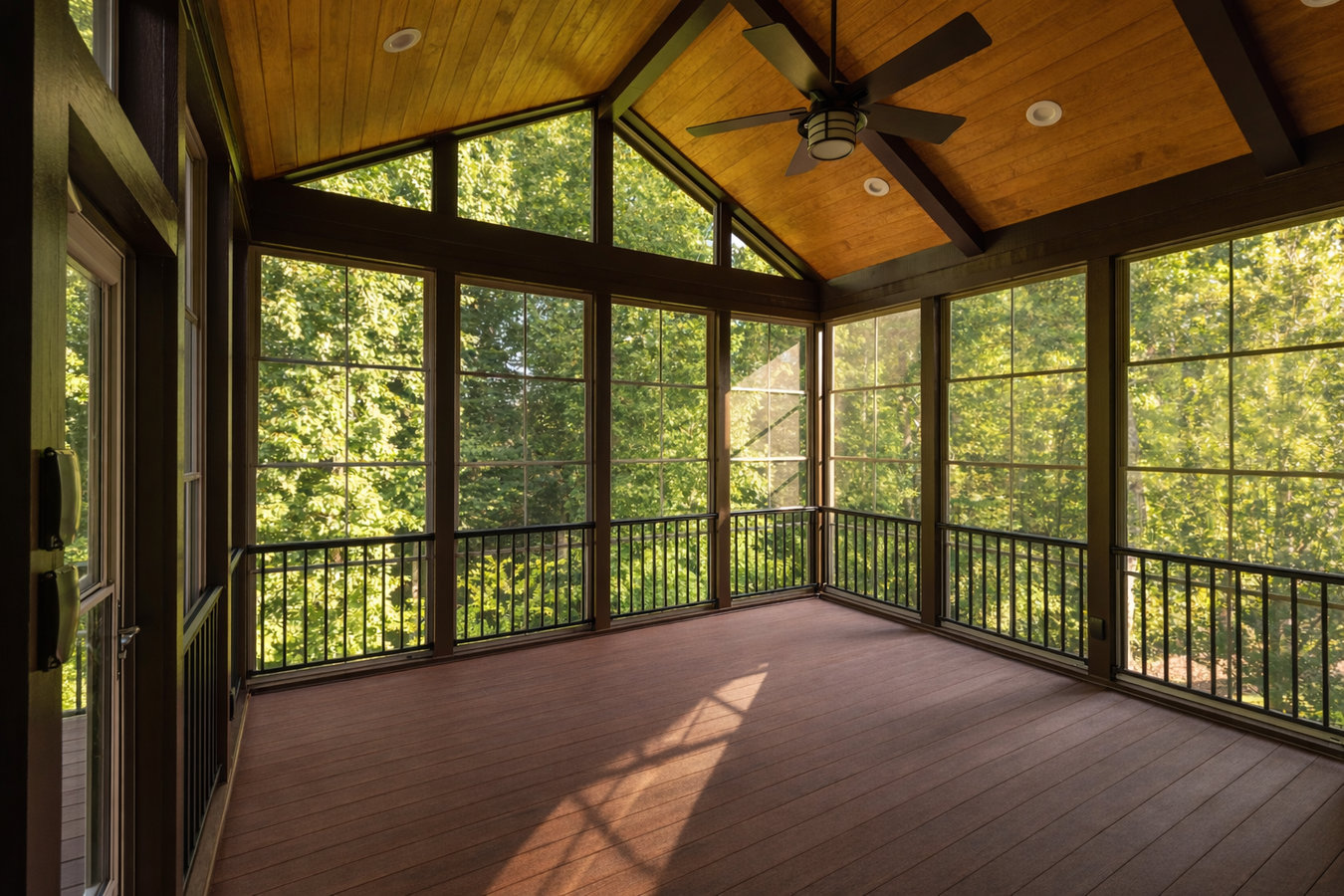
Precision Glendale Sunrooms & Patios builds all season rooms, sunroom additions, and patio enclosures for Burbank homeowners - fully permitted, built for the valley heat, and designed to work in postwar homes and hillside properties throughout the city.
Burbank summers are hot and dry, and winter evenings can be genuinely cold - which makes a room that only works part of the year a frustrating investment. An all season room is fully insulated and climate-controlled, so it functions like any other room in your home regardless of what the temperature is doing outside.
Burbank homes built in the 1940s and 1950s often have small floor plans relative to current needs, and adding square footage by moving is expensive in this market. A sunroom addition gives you a new connected room without a full interior remodel, and in Burbank's bright, dry climate, a properly glazed sunroom earns its footprint every month of the year.
Burbank's postwar ranch homes frequently have covered patios that become unusable in summer heat or winter wind. A patio enclosure adds walls, screens, or glass to that existing structure, turning it into a shaded and sheltered space without the cost of building from the ground up on a new foundation.
A four season sunroom in Burbank means insulated walls, a properly sealed roof structure, and climate control capable of handling both the valley's triple-digit summer heat and the occasional cold January night. This is the right choice for Burbank homeowners who want a home office, plant room, or guest space that works without compromise.
Older Burbank homes sometimes have existing sunrooms or screen enclosures from the 1970s and 1980s with single-pane glass and no insulation - rooms that get abandoned because they are uncomfortable. Remodeling replaces the glass, adds insulation, and upgrades the frame so the room works the way it should have from the start.
Burbank has two distinct property types that benefit from custom design. The flatland bungalows near downtown have tight lots and specific roofline angles that prefab kits don't accommodate. The hillside homes above the valley floor have grade conditions and drainage requirements that need a site-specific approach rather than a standard plan.
Burbank sits in the San Fernando Valley, which is known for trapping heat - temperatures regularly exceed 95 degrees F from late spring through early fall, and triple-digit days are not unusual. A sunroom here that is not designed for this climate becomes an unusable room for months of the year. The glass selection, ventilation strategy, and roof insulation are all decisions that must account for the valley's heat profile, not just Southern California's general reputation for mild weather.
The city's housing stock adds another layer of complexity. Most Burbank homes were built between 1940 and 1965, which means wood-frame construction, stucco exteriors, and original slabs that vary in condition and depth. Connecting a new sunroom to a 1952 ranch home requires a careful assessment of the existing structure - the roofline, the slab edge, and the exterior wall - before any design decisions are finalized. Properties in Burbank's Hillside area near the Verdugo Mountains bring additional grade and drainage considerations that differ significantly from the flatland bungalows near downtown.
Our crew works in Burbank regularly and understands the local conditions that affect sunroom work here. We pull permits through the City of Burbank's Community Development Department and know what the plan-check process looks like for residential room additions in this city. Burbank's permit review is thorough - we factor that timeline into every project schedule from the start so there are no surprises when construction is ready to begin.
Burbank has real neighborhood character worth knowing. The flatland homes near downtown Burbank and the Magnolia Park area are mostly single-story postwar bungalows on tight lots, where the challenge is working within a compact footprint. The Hillside area properties - the ones that climb toward the Verdugo Mountains above the valley floor - are larger and more custom, with retaining walls, long driveways, and hillside drainage that needs to be addressed before a sunroom foundation is ever poured. We have done both types. Major roads like Glenoaks Boulevard and Victory Boulevard run through the city's core; the studio campuses of Warner Bros. and Disney are Burbank landmarks most residents navigate around daily.
We serve the communities immediately around Burbank as well. Homeowners in Glendale to the east and Los Angeles to the south will find the same permitting experience and attention to local conditions that we bring to every Burbank job.
Reach out by phone or form and we respond within one business day. We schedule a site visit, look at your space, and give you a realistic cost range that covers the full project - permits, site prep, and the room itself. No vague numbers, no pressure.
We confirm your lot conditions, check for any HOA requirements, and assess the existing slab or foundation. For hillside properties, this is where slope and drainage get evaluated - important for Burbank's Hillside area homes. This is also when cost anxiety gets addressed: we tell you exactly what affects the price and why.
We handle all permit submissions to the City of Burbank. Plan review typically takes several weeks, and we keep you updated throughout. Construction does not start until the permit is in hand - this protects you and ensures the finished room is fully documented.
The crew builds the room, city inspectors visit at required stages, and we do a final walkthrough when the permit closes. You get warranty documents for materials and workmanship, and a room that is permit-closed, weathertight, and ready to use from day one.
We serve all of Burbank - from the postwar bungalows near downtown to the hillside homes above the valley. Reach out and we will respond within one business day. No obligation, no pressure.
(747) 609-3922Burbank is a city of about 103,000 residents in the eastern San Fernando Valley, bordered by the Verdugo Mountains to the north and Los Angeles to the south and west. The city grew rapidly during and after World War II to house workers in the local aircraft and entertainment industries, which is why the majority of its homes were built between 1940 and 1965. Those postwar ranch homes and bungalows - mostly stucco over wood frame, single-story, on lots of 5,000 to 7,000 square feet - define the look of most Burbank neighborhoods. Median home values sit well above $800,000, and with roughly 44% of housing units owner-occupied, Burbank has a higher-than-average rate of long-term homeownership for a city this close to Los Angeles, according to Census data.
Burbank is defined by two identities that coexist in the same city: the entertainment industry, anchored by Warner Bros. Studios and Disney, and the everyday residential neighborhoods that surround those studios. Magnolia Park and the downtown corridor along San Fernando Boulevard are beloved local gathering spots. The Hillside neighborhoods that climb toward the Verdugo Mountains have a different character - larger lots, more custom homes, and a clear view over the valley. We work throughout all of Burbank, and we also serve neighboring Glendale to the east, where the housing stock and permitting environment are similar.
We know Burbank homes inside and out. Call us or fill out the form and we will be in touch within one business day.